
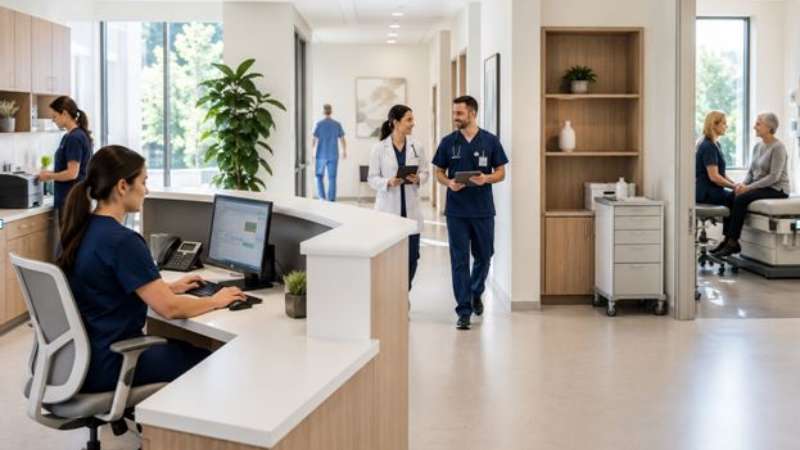
The design of the healthcare environment has a significant bearing on clinical efficiency, patient experience and the wellbeing of staff. Thoughtful design of a dental practice fit out or medical clinic fit out can streamline workflows, reduce waiting times and create a better experience for all parties involved (i.e. patients and staff) through various influences such as room layouts – e.g. layouts of the consultation rooms, as well as the quality and type of equipment chosen, etc.
The Connection Between Design and Clinical Efficiency
As the volume of patients being seen by clinicians increases within the area of high-volume patient care, this makes every moment count. When a healthcare facility is poorly designed/constructed, it is common for bottlenecks to occur, decreasing the flow of the staff; and, likewise, this then translates into an increase in time that clinical staff are navigating through the facility rather than caring for patients.
For example, a well-thought-out dental practice will provide for the use of instruments and consumables available in close proximity to where they will be used during a specific treatment session. The distribution/availability of instruments or consumable supplies to clinicians during the treatment of a patient will occur with minimal amount of excess movement and chair time for the patient.
Patient Flow and Reception Design
Designing patient flow efficiently within your dental clinic also helps create the impression that patients have when they first enter into your practice. An effective design for your reception area can assist with patients’ arrival/check-in, providing for their privacy and wayfinding.
By providing clear sightlines to receptionists, comfortable and appropriately arranged waiting areas, and ensuring that patients flow efficiently from the reception area to/from the various treatment areas (as well as reducing confusion and anxiety for the patient), you will assist your administrative staff in managing appointments and questions from patients as efficiently as possible.
Treatment Room Ergonomics
In designing a dental practice, the ergonomics of the treatment room is critical to the health and productivity of the clinician. The relationship between the dental chair’s exact location within the treatment room, the position of the dental unit, the light, and cabinetry can impact the success of the clinical procedures and the clinician’s comfort. Poor ergonomics may contribute to musculoskeletal disorders that pose a significant concern in dentistry and general practice. A professionally designed fit-out for each treatment room provides for maximum efficiency and comfort for the clinician.
Storage Solutions and Infection Control
Functional storage design provides for both efficiency and compliance with infection control. Having adequate and well-organised storage for consumables and equipment will reduce the clutter, speed the set-up between patients, and allow for proper separation of sterilising workflows from the clinical area. Modern fit-outs will include purpose-built sterilisation rooms, clearly defined clean zones, and easy access to regulatory-compliant storage.
Technology Integration
Today’s health care designs must be able to integrate all of the many current technologies that we have today and will continue to develop in the future. Examples of integrated technologies in health care are: integrated digital imaging systems; electronic medical record work stations; and other technologies. By designing around these types of technologies now, a facility will not have to incur retrofitting expenses at a future date. Designing with future-proofing of the facility’s design for future technology platforms is a part of the experienced fit out contractor’s design and planning package.
Ambiance and Patient Psychology
The colours, lighting, acoustic management, and material selections used in a facility that is designed to provide a calming environment will help reduce patient anxiety: a significant factor in health care compliance and satisfaction. Patients that are at ease with the environment they are in, and that have an aesthetically pleasing facility to visit, will be more inclined to return for future appointments, remain compliant with their treatment plan, and refer others to that facility’s service.
By investing in a functional dental fit out or healthcare design project is investing in clinical excellence. A well-designed facility will yield positive results in staff satisfaction; patient outcomes; and overall long term operational efforts!
How Functional Design Improves Efficiency in Healthcare Practices
The design of the healthcare environment has a significant bearing on clinical efficiency, patient experience and the wellbeing of staff. Thoughtful design of a dental practice fit out or medical clinic fit out can streamline workflows, reduce waiting times and create a better experience for all parties involved (i.e. patients and staff) through various influences such as room layouts – e.g. layouts of the consultation rooms, as well as the quality and type of equipment chosen, etc.
The Connection Between Design and Clinical Efficiency
As the volume of patients being seen by clinicians increases within the area of high-volume patient care, this makes every moment count. When a healthcare facility is poorly designed/constructed, it is common for bottlenecks to occur, decreasing the flow of the staff; and, likewise, this then translates into an increase in time that clinical staff are navigating through the facility rather than caring for patients.
For example, a well-thought-out dental practice will provide for the use of instruments and consumables available in close proximity to where they will be used during a specific treatment session. The distribution/availability of instruments or consumable supplies to clinicians during the treatment of a patient will occur with minimal amount of excess movement and chair time for the patient.
Patient Flow and Reception Design
Designing patient flow efficiently within your dental clinic also helps create the impression that patients have when they first enter into your practice. An effective design for your reception area can assist with patients’ arrival/check-in, providing for their privacy and wayfinding.
By providing clear sightlines to receptionists, comfortable and appropriately arranged waiting areas, and ensuring that patients flow efficiently from the reception area to/from the various treatment areas (as well as reducing confusion and anxiety for the patient), you will assist your administrative staff in managing appointments and questions from patients as efficiently as possible.
Treatment Room Ergonomics
In designing a dental practice, the ergonomics of the treatment room is critical to the health and productivity of the clinician. The relationship between the dental chair’s exact location within the treatment room, the position of the dental unit, the light, and cabinetry can impact the success of the clinical procedures and the clinician’s comfort. Poor ergonomics may contribute to musculoskeletal disorders that pose a significant concern in dentistry and general practice. A professionally designed fit-out for each treatment room provides for maximum efficiency and comfort for the clinician.
Storage Solutions and Infection Control
Functional storage design provides for both efficiency and compliance with infection control. Having adequate and well-organised storage for consumables and equipment will reduce the clutter, speed the set-up between patients, and allow for proper separation of sterilising workflows from the clinical area. Modern fit-outs will include purpose-built sterilisation rooms, clearly defined clean zones, and easy access to regulatory-compliant storage.
Technology Integration
Today’s health care designs must be able to integrate all of the many current technologies that we have today and will continue to develop in the future. Examples of integrated technologies in health care are: integrated digital imaging systems; electronic medical record work stations; and other technologies. By designing around these types of technologies now, a facility will not have to incur retrofitting expenses at a future date. Designing with future-proofing of the facility’s design for future technology platforms is a part of the experienced fit out contractor’s design and planning package.
Ambiance and Patient Psychology
The colours, lighting, acoustic management, and material selections used in a facility that is designed to provide a calming environment will help reduce patient anxiety: a significant factor in health care compliance and satisfaction. Patients that are at ease with the environment they are in, and that have an aesthetically pleasing facility to visit, will be more inclined to return for future appointments, remain compliant with their treatment plan, and refer others to that facility’s service.
By investing in a functional dental fit out or healthcare design project is investing in clinical excellence. A well-designed facility will yield positive results in staff satisfaction; patient outcomes; and overall long term operational efforts!