
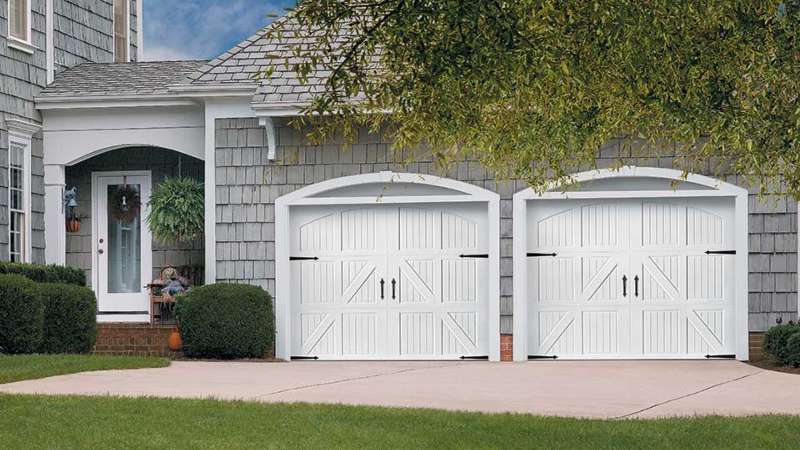
Your garage door system is one of the most used — and most overlooked — parts of your home or commercial property. It opens and closes thousands of times a year, provides a primary entry point, contributes significantly to curb appeal, and plays a direct role in your property’s security and energy efficiency. When something goes wrong, or when it’s time to upgrade, knowing exactly what services are available makes the process faster and less stressful.
Wallen Garage Doors offers one of the most comprehensive ranges of residential and commercial garage door services available — from brand-new custom installations and smart opener upgrades to broken spring replacements, annual maintenance programs, and specialized property management services. This guide walks through every service category so you know exactly what’s available and when to call.
1. Residential Garage Doors
Residential garage door service covers everything a homeowner needs — from selecting and installing a brand-new door to repairing or replacing an existing one. Whether you’re building new, upgrading for curb appeal and energy efficiency, or replacing a door that’s reached the end of its service life, the right residential door choice has a lasting impact on your home’s appearance, security, and value.
Key considerations for residential door selection:
- Material: Steel is the most popular choice for durability and low maintenance. Wood delivers character but requires regular sealing and painting. Composite offers wood aesthetics with better moisture resistance. Aluminum is lightweight and rust-resistant, ideal for modern and coastal homes.
- Insulation: For attached garages, an insulated door (R-12 or higher) reduces heat transfer, lowers energy costs, and makes the space more comfortable year-round. Insulated doors are also quieter and more structurally rigid than single-skin alternatives.
- Style: The door accounts for up to 40% of your home’s front-facing facade. Matching the style to your home’s architecture — raised panel, carriage-house, contemporary flush, or custom designs — creates cohesion that directly impacts curb appeal and resale value.
2. Commercial Garage Doors
Commercial overhead doors are built for heavier use, larger openings, and more demanding environments than residential doors. They feature heavy-gauge steel panels, commercial-grade hardware, and high-cycle springs rated for significantly more operation than standard residential components. Commercial door service includes installation, repair, and ongoing maintenance for warehouses, auto service centers, retail properties, municipal facilities, and any business application requiring overhead access.
What sets commercial door service apart:
- Cycle ratings: Commercial springs and hardware are rated for 100,000+ cycles in high-use applications, compared to 10,000 for standard residential components.
- Operator power: Commercial operators handle heavier door weights and higher duty cycles than residential openers.
- Access control: Card readers, keypads, loop detectors, and building management system integration are standard requirements for many commercial applications.
- Compliance: Commercial doors in workplaces must meet OSHA requirements and local building codes, including safety edges, entrapment protection, and warning signage.
3. New Construction Garage Doors
New construction installations require a different approach than replacement projects. The door opening dimensions, headroom, side room, and structural framing all need to be coordinated with the build schedule — and getting the spec right from the beginning avoids costly corrections later. Working with a garage door specialist during the construction phase ensures the opening is framed correctly, the rough-in for the opener is in the right location, and the door selection aligns with the home’s architectural style and energy efficiency goals.
New construction service typically includes:
- Specification consultation during the planning phase
- Coordination with the general contractor for framing dimensions and electrical rough-in
- Complete door, hardware, track, and opener installation at the appropriate construction stage
- Final programming, safety testing, and homeowner walkthrough before handover
4. New Garage Door Replacement
Replacing an existing garage door is one of the highest-ROI home improvement projects available to homeowners. A new door consistently returns 90%+ of its cost in added home value according to annual Cost vs. Value reports — while also delivering immediate improvements in energy efficiency, security, and daily convenience.
Consider replacement when:
- The door is 15+ years old and showing widespread rust, warping, or structural damage
- Repair costs are approaching 50% of a new door’s price
- The door lacks modern insulation, safety features, or smart technology
- You’re renovating and the existing door no longer suits the home’s updated appearance
- You’ve had the door repaired multiple times in the past few years
5. Custom Garage Door Design
For homeowners who want a door that’s genuinely unique — one that reflects the specific character of their home rather than a catalog selection — custom garage door design delivers what standard product lines can’t. Custom design allows you to specify panel configurations, material combinations, window placement, hardware style, color matching to existing exterior elements, and decorative details that standard doors don’t offer.
Custom design is particularly valuable for:
- Historic homes where the door needs to match a specific architectural period
- Luxury properties where the garage door is a deliberate design statement
- Non-standard opening sizes that don’t fit catalog dimensions
- Homeowners who want a specific color, finish, or panel configuration not available in standard lines
Design visualization tools allow homeowners to upload a photo of their actual home and see how different door styles, colors, and window configurations look on their specific facade before committing — a step that saves costly regrets on a purchase that will define the home’s appearance for decades.
6. Garage Door Installation
Professional installation is the foundation that determines how well every other component in the system performs. A correctly installed door operates quietly, lasts its full rated lifespan, and requires less maintenance than one that was improperly set up from the start. Installation covers:
- Accurate measurement and opening verification
- Removal and disposal of the existing door and hardware
- Panel, track, spring, and cable installation to manufacturer specifications
- Correct spring tensioning for the specific door weight — a critical step that’s frequently mishandled in DIY installations
- Opener mounting, wiring, and programming
- Full safety inspection including balance test, auto-reverse test, and photo-eye sensor alignment
7. Garage Door Repair
Garage door repair addresses the full range of issues that develop over a door’s service life — from minor hardware adjustments to panel replacements and track realignment. The key principle of quality repair service is whole-system assessment: a technician who addresses only the visible symptom without identifying the underlying cause will send you back to the same problem weeks later.
Common repair needs:
- Panel repair or replacement: Dented or cracked panels can often be replaced individually without a full door replacement.
- Track realignment: Bent or misaligned tracks cause binding, jerking, and off-rail failures. Stop operating a door with a compromised track and call for service.
- Roller replacement: Worn or broken rollers grind against the track and accelerate wear on surrounding components. Nylon roller upgrades reduce noise and extend service intervals.
- Hardware tightening: Loose hinges, brackets, and bolts from thousands of cycles of vibration. Left unaddressed, loose hardware accelerates structural wear.
- Weatherstripping replacement: Cracked or missing seals allow drafts, moisture, and pests into the garage. A low-cost repair with immediate impact on comfort and energy efficiency.
8. Broken Spring Replacement
Springs are the most mechanically critical and most failure-prone component in any garage door system. They carry the door’s full weight on every cycle and have a finite, measurable lifespan — approximately 10,000 cycles for standard residential torsion springs, which works out to 6–7 years for a typical household.
Signs a spring needs replacement:
- A loud bang from the garage — often the sound of a spring breaking
- The door is extremely heavy when lifted manually
- The opener strains or slows noticeably during the lift cycle
- A visible gap in the torsion spring coils
- The door won’t stay in place when manually lifted to the halfway position
Spring replacement is always a professional job. A torsion spring under tension stores enough energy to cause severe injury or death if it releases uncontrollably during handling. Both springs should be replaced simultaneously — if one has reached end of life, the other is equally worn and will fail shortly after.
9. Garage Door Openers
The opener is the automated heart of the garage door system. Wallen Garage Doors provides the full range of opener services — new installations, repairs, and replacements — across all major drive types and for both residential and commercial applications.
Opener types and their best applications:
- Belt drive: Quietest standard option. Best for garages adjacent to or below living spaces and bedrooms.
- Chain drive: Most affordable and mechanically durable. Suitable for detached garages where noise is less of a concern.
- Direct drive: One moving part, exceptionally quiet and reliable. Premium longevity with minimal maintenance.
- Jackshaft: Wall-mounted beside the door. Frees ceiling space for storage or lifts. Ideal for high ceilings and specialty garage setups.
Opener repair service covers:
- Drive gear replacement for worn or stripped gears
- Logic board and circuit board repair or replacement
- Photo-eye sensor realignment and replacement
- Force and limit setting adjustment
- Remote and keypad reprogramming
10. Smart Garage Door Openers
Smart garage door openers bring Wi-Fi connectivity, smartphone control, and smart home integration to one of the most frequently used entry points in the home. For homeowners who want visibility and control over their garage door from anywhere, a smart opener is a meaningful upgrade over a standard automated system.
What smart openers deliver:
- Remote control from anywhere: Open or close the garage door from your phone regardless of where you are. Let in a delivery, a contractor, or a family member without being home.
- Real-time alerts: Receive a notification every time the door opens or closes. Know immediately if it’s been left open.
- Auto-close scheduling: Set the door to automatically close after a defined period, eliminating the “did I close the garage?” anxiety entirely.
- Activity history: A timestamped log of every open and close event.
- Smart home integration: Works with Alexa, Google Home, and Apple HomeKit for voice control and automation routines.
- Battery backup: Operates during power outages — critical for storm preparedness and emergency access.
11. Keypads and Garage Door Clickers
Keypads and remote clickers are the access control layer of your garage door system — the tools that determine who can open the door and how. Both are available as standalone products and as part of opener installation packages.
Keypads:
Exterior keypads allow entry via a PIN code without requiring a remote or smartphone. They’re ideal for households with children, frequent guests, or service providers who need access. Modern keypads support multiple PIN codes, temporary codes with expiration dates, and rolling code security. They’re also the backup access method when a remote battery dies or a phone isn’t available.
Garage door clickers (remotes):
Standard remotes and mini key fob remotes allow one-button operation from inside the vehicle. Modern clickers use rolling code technology, generating a new encrypted code with every press — making signal interception and cloning effectively impossible. If you have an older opener with fixed-code remotes, upgrading the system to rolling code technology is a meaningful security improvement.
12. Garage Door Screens
Garage door screens transform an open garage into a functional living or working space by keeping insects, debris, and direct sun out while allowing air flow and natural light in. They’re increasingly popular among homeowners who use their garage as a workshop, entertainment space, home gym, or simply want to enjoy the outdoor air without the bugs.
Garage screen options include:
- Retractable screens: Roll up and out of the way when not needed. Operate manually or with a motorized mechanism. The most versatile option as they don’t interfere with normal garage door operation.
- Magnetic closure screens: Hang in the opening and use magnets to close behind people walking through. Affordable and easy to install, but less durable in wind.
- Full-panel screen systems: Permanent or semi-permanent screen frames that fit into the garage opening. Most durable option, often with integrated door panels for pedestrian access.
13. Annual Maintenance Services
A professional annual maintenance visit is the single most cost-effective investment a homeowner can make in their garage door system. It catches problems before they become failures, extends the lifespan of every component, and keeps the system operating safely — all for a fraction of the cost of a single emergency repair call.
A standard annual maintenance visit covers:
- Full visual inspection of panels, tracks, rollers, hinges, springs, cables, and hardware
- Lubrication of all moving parts with appropriate products
- Hardware tightening — all bolts and brackets checked and snugged
- Spring tension check and adjustment
- Balance test to confirm springs are correctly carrying the door’s weight
- Safety sensor alignment and auto-reverse function test
- Opener force and limit adjustment
- Written condition report noting any components approaching end of life
14. Garage Door Maintenance
Beyond the annual professional visit, ongoing garage door maintenance keeps the system performing optimally between service calls. Homeowners can handle several maintenance tasks themselves with minimal tools and about 15 minutes twice a year:
- Lubrication: Apply silicone spray to rollers, hinges, and tracks. Apply white lithium grease to torsion springs. Never use WD-40 — it’s a water displacer, not a lubricant, and leaves components unprotected.
- Visual inspection: Check for rust spots on steel panels, cracking in weatherstripping, fraying on cables, and any hardware that looks visibly loose or worn.
- Balance test: Disconnect the opener and lift the door manually to waist height. It should stay in place. If it drops or floats, the springs need adjustment.
- Auto-reverse test: Place a 2×4 on the ground under the door and trigger close. The door should reverse immediately on contact. If it doesn’t, call for service.
- Listen actively: New grinding, squeaking, rattling, or straining sounds are early warning signs. Address them before they escalate.
15. Property Management Garage Door Maintenance
For property managers overseeing multi-unit residential or commercial properties — apartment complexes, HOA communities, commercial buildings, or rental portfolios — garage door systems require a coordinated maintenance approach that individual service calls can’t efficiently provide. Property management garage door maintenance programs are designed specifically for this need.
What a property management program delivers:
- Scheduled portfolio visits: Regular inspection and maintenance across all units or buildings on an agreed schedule, rather than reactive calls after something fails.
- Centralized reporting: Written condition reports for each unit or door system, giving property managers visibility into the state of every door in the portfolio.
- Priority response: Program clients receive priority scheduling for repairs and emergency service over non-contract customers.
- Budget predictability: Scheduled maintenance costs are predictable and typically far lower than the combined cost of reactive repairs and tenant disruption.
- Tenant safety compliance: Auto-reverse function, photo-eye sensors, and other safety features tested and documented at every visit — an important liability management step for property owners.
16. Garage Door Estimates
Whether you’re planning a new installation, considering a replacement, or trying to understand the cost of a repair before committing, a professional estimate gives you the information you need to make a confident decision. A quality estimate process includes:
- An in-person or on-site assessment of the existing door, opening, and hardware condition
- Clear itemization of parts and labor costs
- Honest repair-or-replace guidance based on the door’s condition and age
- Options at different price points where applicable, so you can choose based on your priorities and budget
- No-pressure presentation — a good estimate informs your decision rather than pushing you toward one
Final Thoughts
From a simple keypad replacement to a full custom door installation, a property-wide maintenance program, or a smart opener upgrade — the breadth of services available through Wallen Garage Doors means you never need to look further than one provider for any garage door need, residential or commercial.
The most important thing to take away from this guide is that garage door systems reward attention. Regular maintenance, timely repairs, and proactive replacement of aging components keep the system safe, reliable, and cost-effective over the long term. Whatever stage your door system is at — new, aging, or somewhere in between — the right service makes it perform the way it should More Read