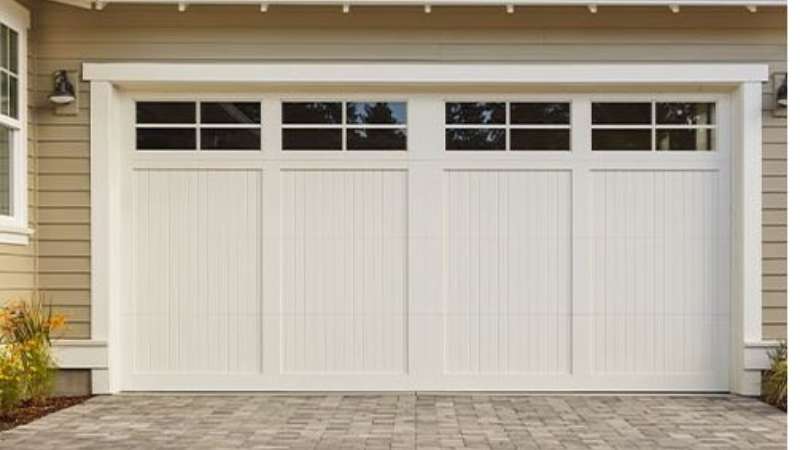
Not all garage and overhead door needs are created equal. A homeowner replacing an aging residential door has different priorities than a warehouse manager sourcing high-cycle commercial doors for a loading dock. And both of them have different needs than a business owner whose overhead door failed at 10 PM on a Friday, leaving their facility unsecured.
Understanding what each category of service covers — residential garage doors, commercial overhead doors, and 24/7 emergency repair — helps homeowners and property managers make better decisions, respond faster when problems arise, and choose the right provider for each situation. Here’s what you need to know.
Part 1: Residential Garage Doors
For most homeowners, the garage door is the largest moving part of the home and one of its most visible features. Residential garage door service covers everything from routine maintenance and repairs to full replacements and style upgrades.
What Residential Garage Door Service Covers
- New door installation: Whether you’re building new, replacing an old door, or upgrading for curb appeal, professional installation ensures correct sizing, spring tensioning, track alignment, and opener integration.
- Panel and hardware repair: Dented panels, broken hinges, worn rollers, and bent tracks are all addressable without replacing the entire door in most cases.
- Spring and cable replacement: The two most failure-prone components in any residential door system. Both require professional handling due to the tension they carry.
- Opener service: From sensor realignment and remote reprogramming to full opener replacement with modern smart home integration.
- Weatherstripping and sealing: Replacing worn bottom seals and side weatherstripping improves energy efficiency and keeps out drafts, moisture, and pests.
Choosing the Right Residential Door
The residential garage door market offers more variety than most homeowners realize. The key decisions are:
Material
Steel is the most popular choice for its durability, low maintenance, and wide style availability. Wood delivers unmatched character but requires ongoing care. Composite and fiberglass offer wood-like appearances with better moisture resistance. Aluminum is lightweight and rust-resistant, ideal for modern and coastal applications.
Insulation
Insulation matters most for attached garages, workshops, and homes in climates with significant temperature swings. Look for an R-value of R-12 or higher for attached garages, and R-16 or above if there’s living space above. An insulated door reduces energy costs, protects stored items, quiets operation, and adds structural rigidity to the panels.
Style
The garage door accounts for up to 40% of a home’s front-facing facade on many properties. Matching the door style to the home’s architecture — raised panel for traditional homes, carriage-house for Craftsman styles, flush aluminum for contemporary designs — creates cohesion that directly impacts curb appeal and resale value.
When to Repair vs. Replace a Residential Door
A useful framework for the repair-or-replace decision:
- Repair if the door is under 12–15 years old, damage is limited to one or two components, and the repair cost is less than 50% of a new door’s price.
- Replace if the door is aging with widespread rust or warping, you’ve repaired it multiple times in recent years, it lacks insulation and modern safety features, or a new door would meaningfully improve curb appeal and home value.
Part 2: Commercial Overhead Doors
Commercial overhead doors serve a fundamentally different purpose than residential garage doors. They’re built for higher traffic, heavier loads, greater security demands, and the operational requirements of businesses, warehouses, industrial facilities, and multi-unit properties. Treating a commercial door need like a residential one — or working with a provider without commercial experience — leads to wrong-sized doors, inadequate hardware, and costly premature failures.
Types of Commercial Overhead Doors
- Sectional steel doors: The most common commercial door type. Heavy-gauge steel panels with commercial-grade hardware and high-cycle springs. Available in insulated and non-insulated versions depending on the application.
- Rolling steel doors: Coil up into a compact housing above the opening. Ideal for applications with limited headroom or where maximum clear opening height is required. Common in warehouses, parking structures, and service bays.
- High-speed doors: Open and close at significantly faster speeds than standard doors — often 3–5 times faster. Used in high-traffic environments like food distribution, cold storage, and manufacturing facilities where fast cycling reduces energy loss and improves workflow.
- Fire-rated doors: Required by code in many commercial and industrial applications. Automatically close in response to heat or smoke, compartmentalizing fire spread. Must be installed and certified by qualified professionals.
- Steel curtain / sheet doors: Solid or perforated steel curtains that roll up for security applications, storefronts, and service windows. Highly secure and available in manual or motorized configurations.
Key Differences Between Residential and Commercial Door Service
- Cycle ratings: Residential springs are typically rated for 10,000 cycles. Commercial springs in high-use applications are rated for 100,000 cycles or more. Using residential-grade components in a commercial setting leads to rapid failure.
- Motor power: Commercial operators are significantly more powerful than residential openers, with three-phase electrical connections on the heaviest applications.
- Safety compliance: Commercial doors in workplaces must comply with OSHA requirements and local building codes. Safety edges, loop detectors, and warning lights are often required by code, not just best practice.
- Access control integration: Commercial properties often require card readers, keypads, intercoms, vehicle detection loops, or integration with building management systems — capabilities that require commercial-grade installation expertise.
- Maintenance schedules: High-cycle commercial doors require more frequent professional servicing than residential doors — often quarterly rather than annually — to maintain safety compliance and prevent costly downtime.
The Real Cost of Commercial Door Downtime
For a business, a failed commercial overhead door isn’t just an inconvenience — it can be a significant operational and financial event. A loading dock that can’t receive or ship, a warehouse that can’t be secured, or a service bay that’s inaccessible has a direct, measurable cost in lost productivity and revenue. This is why commercial door service agreements — which include scheduled maintenance and priority response to failures — are a standard practice for operationally serious businesses.
Part 3: 24/7 Emergency Garage Door Service
Garage door failures don’t schedule themselves for convenient hours. A spring breaks on a Monday morning when you need to leave for work. A commercial door gets hit by a forklift at 9 PM. A door jams open overnight, leaving a home or business completely unsecured. These situations require a provider who can respond immediately — any hour, any day.
What Qualifies as a Garage Door Emergency?
Not every garage door issue requires emergency service, but these situations do:
- Door stuck open: A door that won’t close leaves your home or business completely exposed to theft, weather, and unauthorized entry. This is a security emergency that cannot wait until the next business day.
- Door stuck closed: A door that won’t open can trap a vehicle inside, block access to critical equipment, or prevent a business from opening. Equally urgent depending on the circumstances.
- Broken spring: A failed spring makes the door effectively inoperable and places dangerous strain on the opener and cables. Attempting to force a door with a broken spring risks further damage and injury.
- Snapped cable: A broken cable causes the door to hang crookedly and can result in sudden, uncontrolled dropping. The door should not be operated in this condition.
- Vehicle impact: A car backing into the door, or a forklift clipping a commercial door, can bend panels, knock the door off its tracks, and damage the frame. The door may appear to function but could fail completely without warning.
- Storm damage: High winds, falling debris, and structural impacts during storms can compromise a door’s integrity and seal, creating both security and weather exposure issues.
What to Do While You Wait for Emergency Service
If your garage door fails and you’re waiting for a technician, here’s how to manage the situation safely:
- Don’t force the door. Attempting to manually open or close a door with a broken spring or snapped cable can cause the door to drop suddenly or cause further structural damage.
- Don’t run the opener. Operating the opener against a door that’s stuck or off its tracks can strip gears, burn out the motor, and worsen the situation significantly.
- Secure the opening if the door is stuck open. If possible, lock the interior door between the garage and the house, move valuables away from the opening, and consider a temporary barrier if the property needs to be left unattended.
- Note what happened. The sound you heard, what the door was doing, and whether it happened during opening or closing helps the technician diagnose the problem faster and arrive better prepared.
- Keep people and pets away. A compromised door is unpredictable. Keep the area clear until the technician arrives and the system is safely secured.
What to Expect From a 24/7 Emergency Call
A quality emergency service provider will:
- Answer the phone immediately — not a voicemail or a next-day callback
- Give you a realistic arrival window upfront
- Arrive with the most common replacement parts on the service vehicle, minimizing additional delays
- Diagnose the full failure — not just the visible symptom — so a secondary component doesn’t fail days later
- Provide a clear explanation and written estimate before beginning work
- Leave the door in a fully functional and safe condition before departing
How to Reduce the Likelihood of an Emergency
Most garage door emergencies are predictable failures — components that showed warning signs before they gave out completely. These habits significantly reduce the odds of an emergency call:
- Schedule annual professional inspections. A technician can identify springs approaching end of life, fraying cables, and worn rollers before they fail.
- Lubricate moving parts every 6 months. Springs, rollers, hinges, and tracks should be treated with a silicone or white lithium lubricant to reduce friction and wear.
- Don’t ignore warning signs. Unusual sounds, slow operation, and uneven movement are the door telling you something is wrong. Address them on your schedule, not in a crisis.
- Replace springs proactively. If your springs are 7–9 years old or have reached their cycle rating, replacing them before failure is far cheaper and less disruptive than an emergency call.
Final Thoughts
Whether you’re a homeowner looking to upgrade a residential door, a property manager sourcing commercial overhead doors for a facility, or someone dealing with a door that just failed at the worst possible time — having a trusted local overhead door company that covers all three service areas is genuinely valuable.
The right provider isn’t just one who shows up when things go wrong. It’s one who helps you understand your system, maintain it proactively, and make smart decisions about when to repair and when to replace — so emergencies become the exception rather than the rule.
For residential garage doors, commercial overhead door solutions, and 24/7 emergency service, Merchantville Overhead Door is ready to help. Contact us any time — day or night — for fast, professional service you can count on.